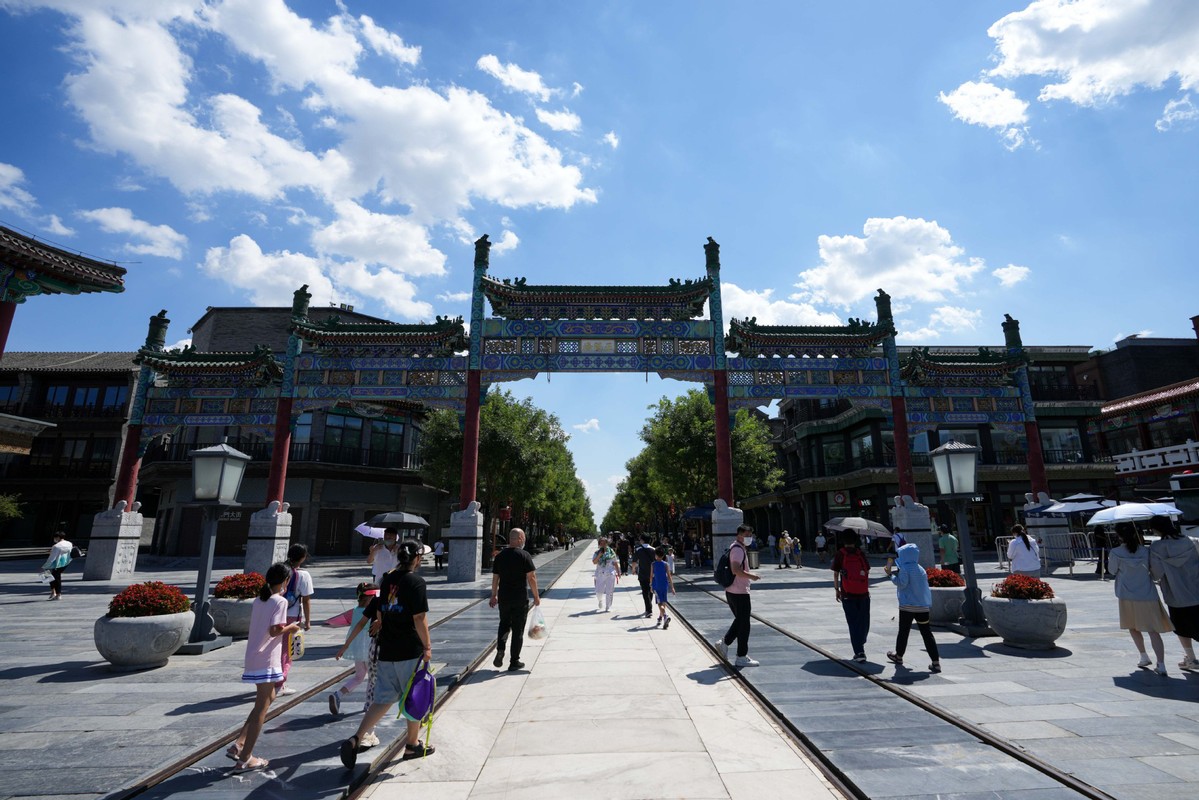
Qianmen Street
Overview
Qianmen Street is one of Beijing's most famous commercial streets, located along the city's central axis. Stretching from the Zhengyangmen Embrasured Watchtower in the north to Tiantan Road (Temple of Heaven Road) in the south, it connects with Tianqiao South Street. Before the outer city was built in 1550, Qianmen Street served as the royal route for emperors traveling to the Temple of Heaven and the Altar to the God of Agriculture.
After the completion of the outer city, it became the main north-south artery, known to the public as Qianmen Street. The street was officially called Zhengyangmen Street during the Ming and Qing dynasties (1368-1911) before being renamed Qianmen Street in 1965. It spans 1,660 meters in length and 20 meters in width (for carriageways).
Historical Significance
During the Ming and Qing Dynasties, as urban development flourished, Qianmen Street became a thriving hub of bazaars and guild halls, gradually evolving into a major business district centered around shopping and entertainment. Iconic establishments such as Quanjude Peking Roast Duck (established in 1864), Bianyifang Roast Duck Restaurant, Ruifuxiang Silk (since 1862), and Tongrentang Chinese Medicine (since 1669) opened outlets on the street, creating a cultural circle rich in history and tradition.
Cultural and Commercial Appeal
Unlike the more modern Wangfujing Pedestrian Street, Qianmen Pedestrian Street maintains a stronger emphasis on Beijing's traditional character and cultural heritage. The street is divided into several functional areas, including Beijing culture, domestic and international cuisines, brand shopping, and leisure and fitness. Today, over 80 of China's time-honored brands can be found along Qianmen Street, reflecting the deep cultural legacy and historical significance of the area. Article reference1. Qianmen Street. chinadaily.com.cn. 2024Photo Gallery(2 pictures)CategoriesTourismTagCity TourismRelatedDashilanChina Railway MuseumQianmen DajieCatalogue1. Overview2. Historical Significance3. Cultural and Commercial Appeal- - - []








